
Telecom is one of the largest industries in the world. It is also entering one of the most critical periods of its lifetime.
Fast, reliable coverage powers almost every part of modern life. It carries the calls, payments, platforms, and services that shape how we work, move, buy, learn, and stay in touch. As more of the world comes online and more of daily life depends on stable connectivity, the importance of connectivity continues to grow exponentially.
The numbers back this up. Mobile technology contributed $7.6 trillion to the global economy in 2025 alone, which is 6.4% of the global GDP. By 2030, that contribution is expected to rise to $11.3 trillion.
The demand is immense. The pressure is on telecom companies to provide secure, accessible internet that can scale rapidly. And in that pressure lies the opportunity of a lifetime.
Let’s take a closer look at what is happening.
Demand: A story of unprecedented growth
The world is more connected than it has ever been, but it is still extremely far from fully connected. The International Telecommunications Union (ITU) estimates that 6 billion people were online in 2025. That still leaves 2.2 billion people offline. The gap is still enormous.
Additionally, even the baseline demand from people already connected continues to rise. Ericsson says average smartphone data consumption globally is projected to increase from 21 GB per month in 2023 to 56 GB per month in 2029. This means that the demand for connectivity will double in the coming years: and that’s just the people who have already been brought online.
The amount of traffic moving across networks keeps climbing with this explosion in demand. Ericsson also reports that mobile network data traffic increased 19% year over year from Q1 2024 to Q1 2025. Its June 2025 outlook says global mobile data traffic will more than double by the end of 2030.
The takeaway: billions of people are demanding access to connectivity. Existing users are demanding more data. More devices are coming online every year. More of daily life is becoming dependent on stable coverage. And with the advent of AI, this pressure is only expected to rise dramatically.
Telecom is fast establishing itself as the centerpiece of modern life. This exploding demand curve needs a supply curve to match.
Supply: A story of failing infrastructure
That demand would be easier to serve if supply could expand cleanly and quickly. In practice, it does not.
ITU’s 2025 connectivity report makes the gap clear: access has improved, but quality, affordability, devices, and security still shape whether connectivity is truly meaningful. Coverage on paper is not the same as coverage in real life.
“There are persistent connectivity divides that reflect broader socioeconomic inequalities. The income divide is paramount, showing a clear positive correlation between a country’s GDP per capita and its Internet adoption rate; most low-income countries remain below 50 per cent penetration.” - International Telecommunication Union, Global Connectivity Report 2025
The economics explain why this is often the case. GSMA Intelligence has pointed to the structural challenge of expanding networks into lower-density and lower-income areas, where operators face high fixed costs against a weaker revenue base. This means that rollout often lags behind demand, especially in markets and locations where the need is present, but the existing model does not have the speed or the incentive to respond.
The result is familiar: patchy indoor signals, overloaded high-traffic zones, bad coverage in semi-urban or remote areas, no coverage in developing or low-income economies, and steeply rising prices that keeps billions of people out of meaningful coverage.
This is not a minor inefficiency. It is a large structural gap inside a sector worth trillions. That gap is exactly where the next phase of telecom growth can take root.
The opportunity at the heart of telecom
When demand explodes inside a trillion-dollar industry and supply still struggles to keep pace, the opportunity becomes obvious.
Telecom does not just need more growth. It needs a new kind of infrastructure models that can expand faster, deploy more flexibly, and open up wider incentives for the world to participate in their expansion.
The market is large, the need is clear, and the value attached to solving that need is enormous. This is the kind of opening that can reshape who benefits from telecom growth for decades to come.
The solution: Decentralized connectivity powered by AirNodes
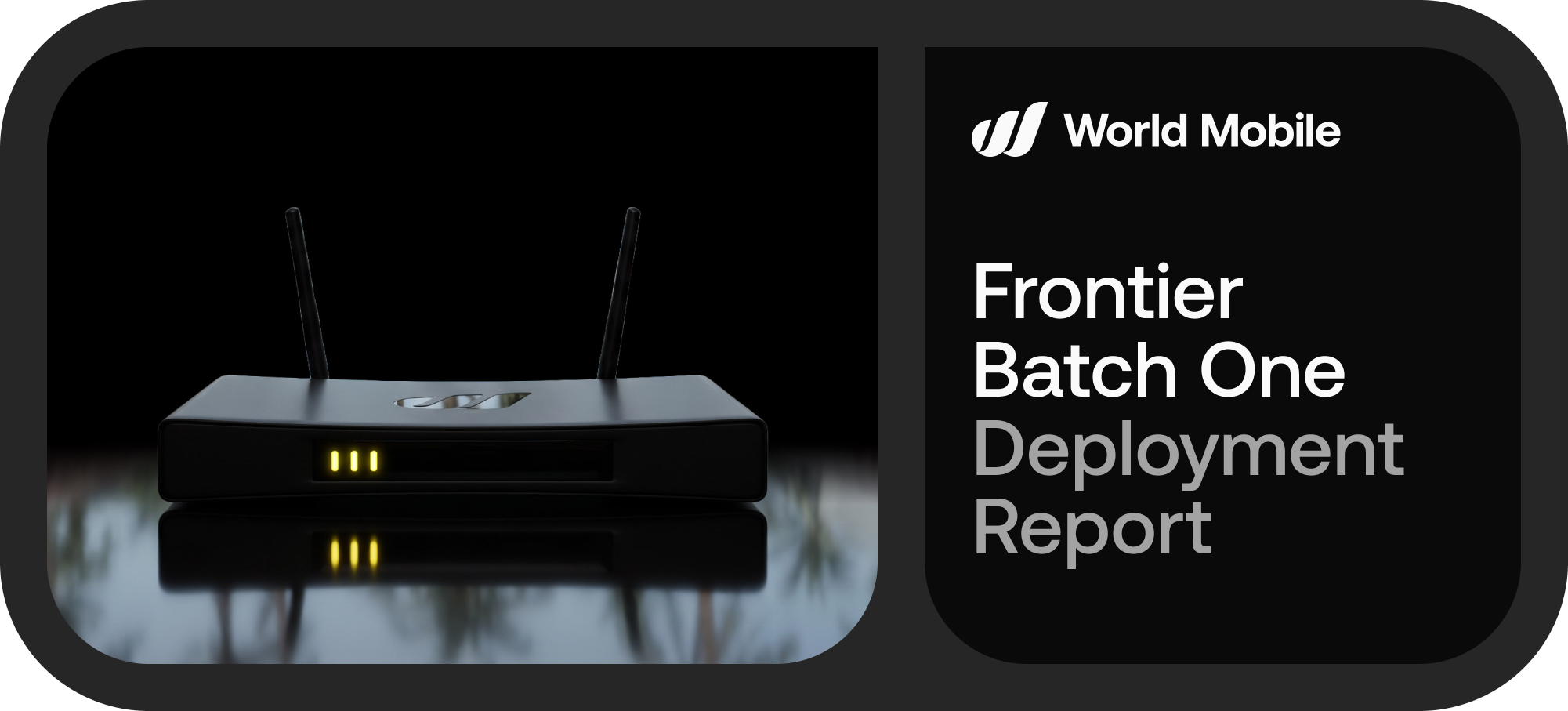
AirNodes are World Mobile’s answer to this opportunity. They are the foundation of the World Mobile network: wireless devices that provide coverage and generate earnings for the people who operate them. They expand the network in a decentralized manner, meaning that each AirNode is owned by an individual Operator, not controlled by a telecom company.

By their distributed, people-driven nature, AirNodes capture the opportunity that lies between telecom demand and supply today. They create a decentralized model of telecom growth, and open participation in that growth to people who can own and earn from network infrastructure.
In other words, AirNodes turn a structural gap inside telecom into an unprecedented opportunity for public participation.
Does this model work? It is already working.
The proof is in the numbers. World Mobile has deployed 140,000+ AirNodes as of April 2026 across three continents and generated $1.5 million+ in earnings, crossing 3 million Daily Active Users of World Mobile services.
AirNode Operators are earning consistently from their AirNodes every month. Some of those earnings have crossed $6,000 monthly. While the exact rewards earned vary depending on AirNode model and the traffic carried by that AirNode, the message is clear. AirNodes are operating inside a live network, with verified usage, reliable scale, and a consistent opportunity for people to earn.
The transformation telecom needs
Connectivity is not a luxury today; it is a utility, just like food, water, shelter, and health. The economic value attached to affordable, reliable coverage is higher than it has ever been before. And with supply failing to be as rapid, accessible, and adaptable as it needs to be, there has never been a better time for a new solution to transform the industry forever.
AirNodes are that solution. They expand coverage. They support a distributed model of infrastructure growth. And they open a brand-new pathway for people to share the value created by one of the most important and profitable industries on earth.
Telecom is worth more than a trillion dollars. At the heart of it lies a trillion-dollar opportunity. AirNodes bring that opportunity to you.
Explore AirNodes. See the future of global telecom.
.png)
