The Philippines is a nation shaped by water.
More than 7,000 islands stretch across the western Pacific, connecting thriving cities, remote communities, tourism centres and fast-growing local economies. That geography gives the country its character. It also makes building consistent connectivity a challenge.
Traditional infrastructure cannot always expand quickly or economically across an archipelago. In places such as Siargao, businesses requiring dependable internet are often left with a narrow set of options. Starlink can provide an alternative, but the equipment and service can be costly, particularly for smaller local businesses. As demand grows and more people need to connect in the same area, the limitations of relying on one solution become increasingly clear.
World Mobile believes connectivity should adapt to the places and people it serves.
Now, that belief is taking another step forward.
On 29 July 2026 at 16:00 UTC, World Mobile will open Frontier Drop One, giving eligible EmberNode Operators the first opportunity to own Frontier AirNodes supporting our commercial rollout in the Philippines.
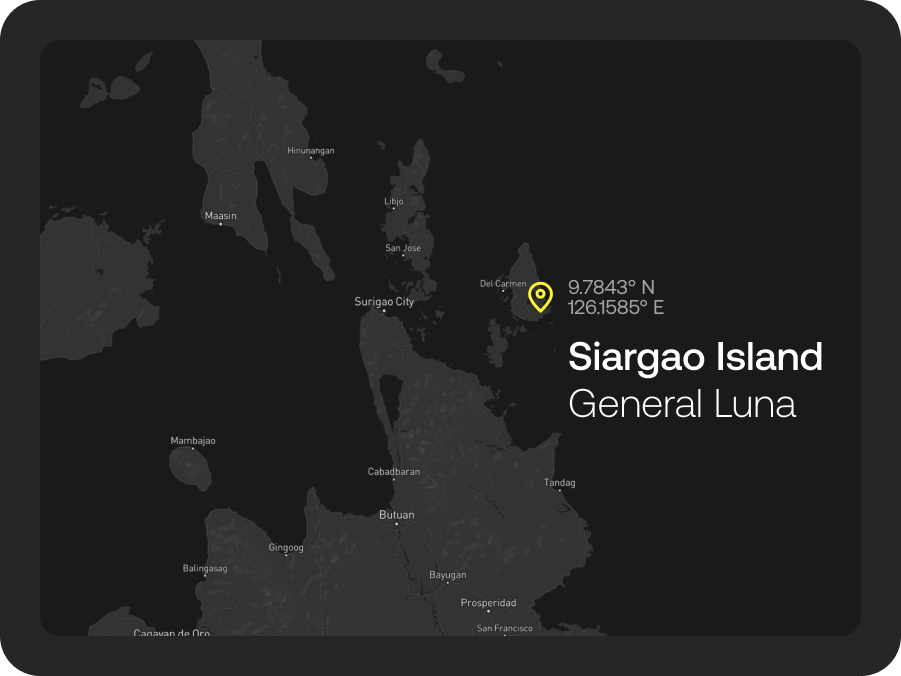
The rollout begins in Siargao, primarily around General Luna.
This is where the next market starts.
From testing to commercial service
The Philippines has been part of the World Mobile roadmap for some time.
We announced our plans. We established partnerships with teams that understand the local market. We placed the first AirNodes on the ground and began testing how the complete service would work in practice.
Those early deployments were about much more than switching on hardware.
They validated installation and service quality. They helped confirm customer demand. They allowed the local teams to test the operational flow from signing a business through to deployment, activation and ongoing support.
That work is now complete.
The first businesses are contractually committed and waiting to be connected. The local operating model is in place. Frontier marks the transition from testing the opportunity to serving it commercially.
Why Siargao
Siargao has grown into an internationally recognised destination, but its connectivity requirements extend well beyond tourism.
Restaurants, hotels, shops, workspaces and local service providers all depend on reliable internet. Payments, bookings, communications and daily operations increasingly take place online. When connectivity falters, the impact is immediate.
For many businesses, the available alternatives can be expensive or difficult to scale. A satellite connection may work for an individual location, but it is not always the most efficient answer as local density and demand increase.
World Mobile is approaching the problem differently.
Rather than beginning with infrastructure and hoping demand follows, the first Frontier AirNodes will be matched with businesses that have already committed to service.
That means each initial deployment begins with a clear purpose: connect a real business, support its day-to-day activity and expand the network in response to established local demand.

Local execution. Global ownership.
Frontier brings together local knowledge and community ownership.
Community Wi-Fi Corporation will manage customer relationships, coordinate installations and operate the AirNodes on the ground. eSariSari will provide the customer-facing connectivity service to local businesses.
Eligible AirNode Operators around the world will be able to own the Frontier AirNodes supporting those connections.
The Operator does not need to travel to the Philippines or install the equipment. The hardware is deployed and maintained locally. The Operator owns the AirNode, receives its unique identifier and monitors its status through the World Mobile AirNode platform.
Each part of the model has a clear role.
Local teams bring the relationships, field operations and market knowledge required to deliver dependable service. Operators provide community-owned infrastructure. World Mobile brings both together within a network designed to expand around real demand.
This is what decentralised connectivity looks like when it moves from an idea into everyday commercial operation.
Meet the Frontier AirNode
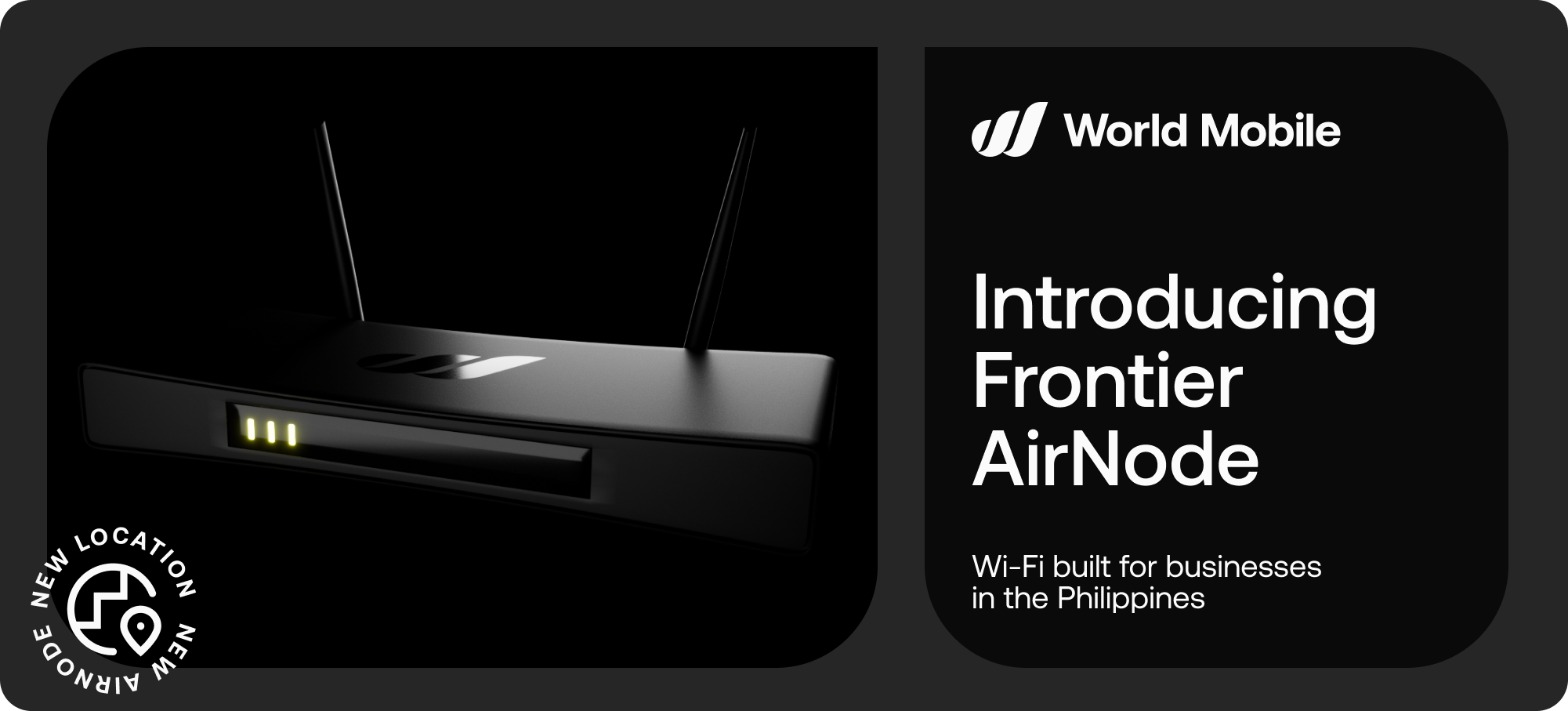
Frontier is a Wi-Fi AirNode designed to connect a business in the Philippines.
Every Frontier AirNode will:
- carry its own unique identifier
- be matched to a contracted business service
- be installed and operated locally by CWC
- be owned and monitored remotely by an AirNode Operator
- carry a monthly operator reward once the associated service has been activated
- The model builds on lessons already proven elsewhere in the World Mobile network.
In Pakistan, Spark AirNodes demonstrated that customer-facing infrastructure could be owned remotely while deployment and operations were managed by local teams. Frontier takes that principle into a new country and applies it to business connectivity.
The market is different. The customer packages are different. The operating partners are different.
The underlying idea remains the same: infrastructure can be owned by the community while being deployed by people with the local expertise to make it work.
Four Frontier packages
Frontier launches with four customer packages. The four tiers carry different prices, serve different customer packages and offer different levels of commercial potential.
At retail list price, each tier has an illustrative payback period of approximately 33.3 months from service activation.
The calculation is based solely on the current monthly operator reward. It does not include any potential earnings from future public Wi-Fi bundles or value-added services.

As you move through the Frontier range, the opportunity grows. Higher tiers are aligned with stronger commercial locations, higher-value customer packages and greater potential for future variable rewards from public Wi-Fi, Wi-Fi offload and value-added services.
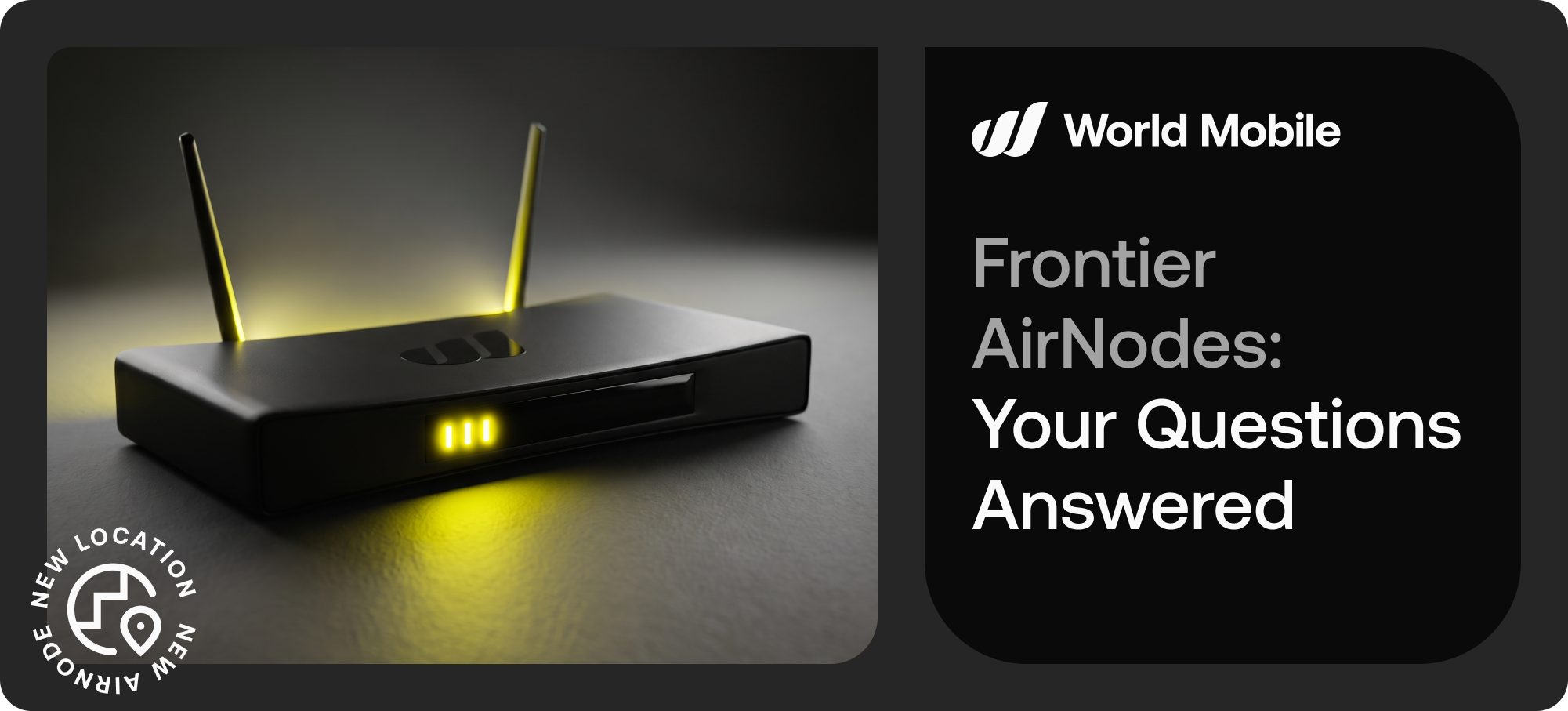
Read the Frontier FAQ to learn about what you are buying, how the tiers differ, how pricing works and what happens after purchase.
Rewards and illustrative payback are not guaranteed. They depend on continued customer activity, operational status and the applicable AirNode terms.
Future rewards are not guaranteed and will depend on service availability, usage and network performance.
From ownership to active service
Purchasing a Frontier AirNode secures the infrastructure, but rewards do not begin immediately.
Each AirNode must first be assigned, installed and connected to its associated business service.
Following purchase, CWC will complete the local deployment process. This includes matching the AirNode to the relevant customer package, arranging installation, activating the business connection and confirming that the service is operational.
Operators should allow an activation window of up to 60 days.
The monthly operator reward begins accruing only after the connected business service has gone live. It does not begin on the date of purchase.
This period gives the local team the time required to complete the work properly, from deployment scheduling to final service activation.
If a connected business later leaves the service, CWC will seek to connect a replacement customer or redeploy the AirNode to another suitable location. Rewards may pause while that transition is completed.
A base for what comes next
Frontier begins with a monthly operator reward tied to an active business connection.
It is also being designed with a broader future in mind.
In time, Frontier AirNodes may support public Wi-Fi bundles and other value-added services, creating potential usage-linked earning opportunities alongside the base model.
These services are not included at launch. No additional reward amount or launch date is currently being promised, and no potential future earnings are included in the illustrative payback calculation.
Frontier starts with a simple foundation: a business is connected, a local team operates the service and an AirNode Operator owns the infrastructure supporting it.
From that foundation, the opportunity can grow with the network.
Available first to EmberNode Operators
Frontier Drop One will be reserved for eligible EmberNode Operators.
EmberNode and Frontier serve different parts of the network.
EmberNode supports the distribution layer in Pakistan, helping capacity move from the backbone towards the local devices that serve communities. Frontier sits at the customer edge in the Philippines, connecting individual businesses.
Together, they show how community ownership can extend across different markets and different parts of a telecom network.
Giving EmberNode Operators first access to Frontier recognises the community already participating in that infrastructure.
Any eligible EmberNode Operator can access Frontier Drop One, regardless of when their EmberNode was purchased.
Build the Backhaul. Win a Frontier Bundle.
Before Frontier Drop One opens, there will be another way for the community to take part.
From 24 July, every EmberNode purchased during the competition qualifying period will create one entry into the Build the Backhaul. Win a Frontier Bundle. prize draw.
One winner will receive a complete Frontier bundle:
- one Frontier Core
- one Frontier Plus
- one Frontier Pro
- one Frontier Max
- The total retail value of the bundle is $4,285.
One EmberNode purchased during the qualifying period equals one entry. More EmberNodes purchased means more entries.
Only EmberNodes purchased during the competition window will create prize-draw entries. However, Frontier Drop One eligibility is not limited to new purchasers. Any eligible EmberNode Operator can participate in the drop.
EmberNode remains valuable infrastructure in its own right. It supports the distribution layer of the live Pakistan network and earns variable rewards based on verified traffic carried. The competition and priority access to Frontier add another reason to participate, but they do not replace EmberNode’s role in the network.
The draw and winner-announcement dates will be confirmed following Frontier Drop One. Full terms and conditions apply.
.png)