Two Frontier drops. Two sell-outs. And today, Batch One reaches its final release.
But the story behind Frontier is bigger than a drop.
Over the past 18 months, World Mobile and its partners have been building the foundations for a new connectivity model in the Philippines. Fibre. Local operations. Regulatory relationships. Backhaul. Deployment partners. Businesses ready to connect.
It starts in Siargao, but it was never designed to end there.
Ahead of today's final Frontier Batch One drop, World Mobile co-founder and Chief Country Operations Officer Andrew Soper joined the community on X to explain why the Philippines opportunity matters, what is being built on the ground, and why one of the most accessible Frontier tiers may also be one of the most interesting.
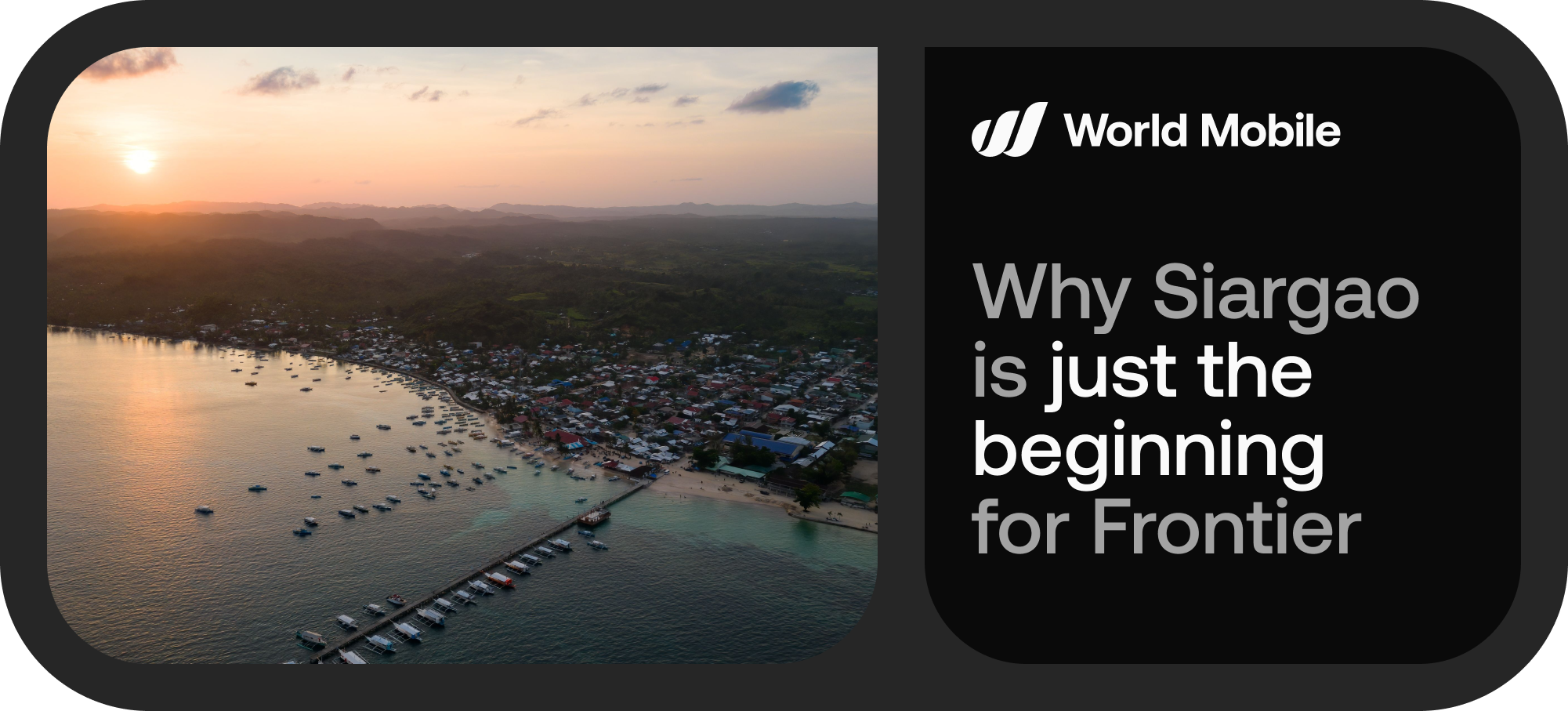
Why Siargao?
World Mobile has built networks in very different environments, from Zanzibar and Mozambique to Pakistan and the United States.
The Philippines presented a different kind of opportunity.
As World Mobile began working with local partner eSari-Sari, the team saw a market with higher average revenue per user than many previous rollout regions, combined with a clear gap for reliable connectivity at a fair price.
Siargao brought those conditions into sharp focus.
In General Luna, the island's commercial and tourism center, hotels, cafés, surf shops, homes and other businesses sit side by side. The stretch toward Cloud 9 attracts residents, Filipino tourists, international travelers, surfers and remote workers.
Demand for internet is everywhere. The infrastructure serving it has struggled to keep pace.
As Andrew put it during the Space:
“People are screaming for a high quality, fairly priced internet service on the island.”
That is the problem Frontier is being deployed to solve.
The rollout combines fibre connectivity with Frontier equipment installed at homes and businesses. Each installation can provide connectivity to its primary location while also contributing to wider public Wi-Fi coverage.
The result is not simply a collection of isolated connections. As deployment density grows, the ambition is to create a broader Wi-Fi experience across places such as General Luna, allowing people to connect as they move through the area.
Eighteen Months Behind the Drop
Buying a Frontier takes minutes.
Building the market behind it took around 18 months.
Before the first large-scale rollout could begin, the team had to answer the questions that determine whether a telecom network works in the real world.
What does the regulator require? Where does the backhaul come from? Where is internet traffic peered?
Where does the data center sit? What does fibre cost to deploy per kilometer? What hardware is required?
What can local homes and businesses afford?
Then come the partnerships.
One of the most important is with the local electrical cooperative. Using existing utility infrastructure reduces the need to trench new fibre routes and brings another operational advantage: local teams already maintain those lines every day.
That becomes particularly important in an island environment where severe weather can affect infrastructure.
On the ground, licensed local partner CWC, trading as eSari-Sari, is responsible for local telecom operations, billing and collection. A team of around ten people has been preparing for the rollout, bringing experience from mobile operators, fibre companies, ISPs and telecom deployments.
This is what sits behind a Frontier purchase.
Not a theoretical future network. A commercial operating model built around local expertise, physical infrastructure and connectivity demand.
Build the Machine. Then Scale It.
The philosophy behind the rollout is deliberately repeatable.
Andrew described it simply:
“We set up a machine and then we copy and paste the machine elsewhere.”
World Mobile has already applied versions of this model across other markets. In Pakistan, for example, World Mobile worked with WorldCall to combine local operational capability with World Mobile's network model.
Siargao is about adapting that machine to the Philippines.
Deployment begins in the south of the island, initially around General Luna and toward Cloud 9, before moving farther north.
Beyond Siargao, the equation could become easier.
World Mobile is already working with electrical cooperatives elsewhere in the Philippines where fibre infrastructure exists but is not yet being fully utilized. That could reduce some of the work required to establish the underlying network in future rollout areas.
The partnerships surrounding the deployment also extend beyond Siargao. Andrew described a serviceable addressable market across existing relationships of approximately 25 million people.
Siargao is therefore important for two reasons.
It is a market with an immediate connectivity need.
And it is a place to prove a model designed to travel.
The Overlooked Frontier Opportunity: Core
Much of the attention across the first two Frontier drops has naturally gone to Pro and Max.
They are the higher tiers. Their supply is more limited. And they sold quickly.
But Andrew made a strong case during the Space for looking again at Frontier Core.
The reason starts with Wi-Fi coverage.
For public Wi-Fi coverage, Andrew explained that Core, Plus and Pro have comparable coverage capability. The difference between tiers is driven more by the type of location, bandwidth requirements and the commercial package serving that location.
That changes the way Core can be viewed.
Rather than concentrating participation into one higher-tier Frontier, Core makes it possible to spread across more locations for the same overall spend.
In Andrew's words:
“A Core is the same as a Plus as a Pro for Wi-Fi coverage. More coverage per dollar.”
That matters in a market like General Luna.
The opportunity is not concentrated only inside large hotels. Connectivity demand exists across homes, cafés, stores and smaller businesses, alongside public areas where people gather and use Wi-Fi.
Andrew pointed specifically to the Philippines' established prepaid or “sachet” culture, where people frequently buy goods and services in smaller amounts as they need them. Wi-Fi already fits naturally into hat behavior.
More deployed locations can therefore mean more places participating in that local connectivity layer.
And Core Does Not Have to Stay Core
There is another important part of the Frontier architecture.
The tier attached to a location can evolve with the needs of the business using it.
Andrew explained that a Core location can move to Plus, Pro or Max with an access point change and the corresponding network configuration. A location that begins with relatively modest bandwidth requirements can therefore evolve if its connectivity requirements increase.
A larger hotel may justify Max from the beginning. A smaller shop or home may begin at Core.
The important point is that the hardware architecture does not permanently lock every location into its starting demand profile.
For Andrew, that is part of what makes Core particularly interesting:
“I would want to see maximum Wi-Fi coverage for my dollar, because of the B2C potential.”
Different Frontier tiers serve different locations. Bigger does not automatically mean better for every deployment.
In a dense market built around homes, businesses and public Wi-Fi, distribution matters too.
Max: Limited by the Island Itself
Max is built for the biggest sites: larger hotels, major businesses and locations with the bandwidth demand to justify it. That means supply is naturally limited.
There are only so many suitable Max locations across Siargao, and Andrew was clear that this will keep future availability constrained.
While Core, Plus and Pro can be deployed across a much wider mix of homes and businesses, Max depends on a smaller pool of high-capacity sites.
More Than B2B Fibre
The initial commercial model gives Frontier a clear foundation: connect homes and businesses that need better internet.
But the network being installed can support more than that.
Public Wi-Fi creates an additional connectivity layer around the underlying business connections. World Mobile is also in advanced discussions with an established Philippine mobile network operator around a potential broader partnership involving backhaul, Wi-Fi and cellular coverage.
Those discussions are not yet finalized.
World Mobile is also targeting its first cellular site in the Philippines before the end of 2026, with the team exploring whether an initial deployment could be ready around the Siargao surf competition later this year. Andrew was clear that the timing remains ambitious and is not guaranteed.
Beyond telecom, the same connectivity rails could ultimately support other services.
Andrew highlighted energy and financial services as areas the team is exploring with local partners, including potential applications built using World Mobile Chain.
The logic is simple.
Before digital services can reach people, people need to be connected.
Frontier helps build that foundation.
From Siargao to Scale
Andrew set the team an ambitious internal goal: reach one million daily active users within 12 months of the Philippines rollout beginning at scale.
It is a goal, not a forecast.
But it demonstrates the scale at which the Philippines opportunity is being approached.
World Mobile is not building Siargao as an isolated deployment. The work happening there is designed to establish the commercial, technical and operational template for what comes next.
Build the fibre.
Connect homes and businesses.
Expand Wi-Fi coverage.
Work with local partners.
Prove the machine.
Then take it further.
Frontier Batch One: The Final Drop
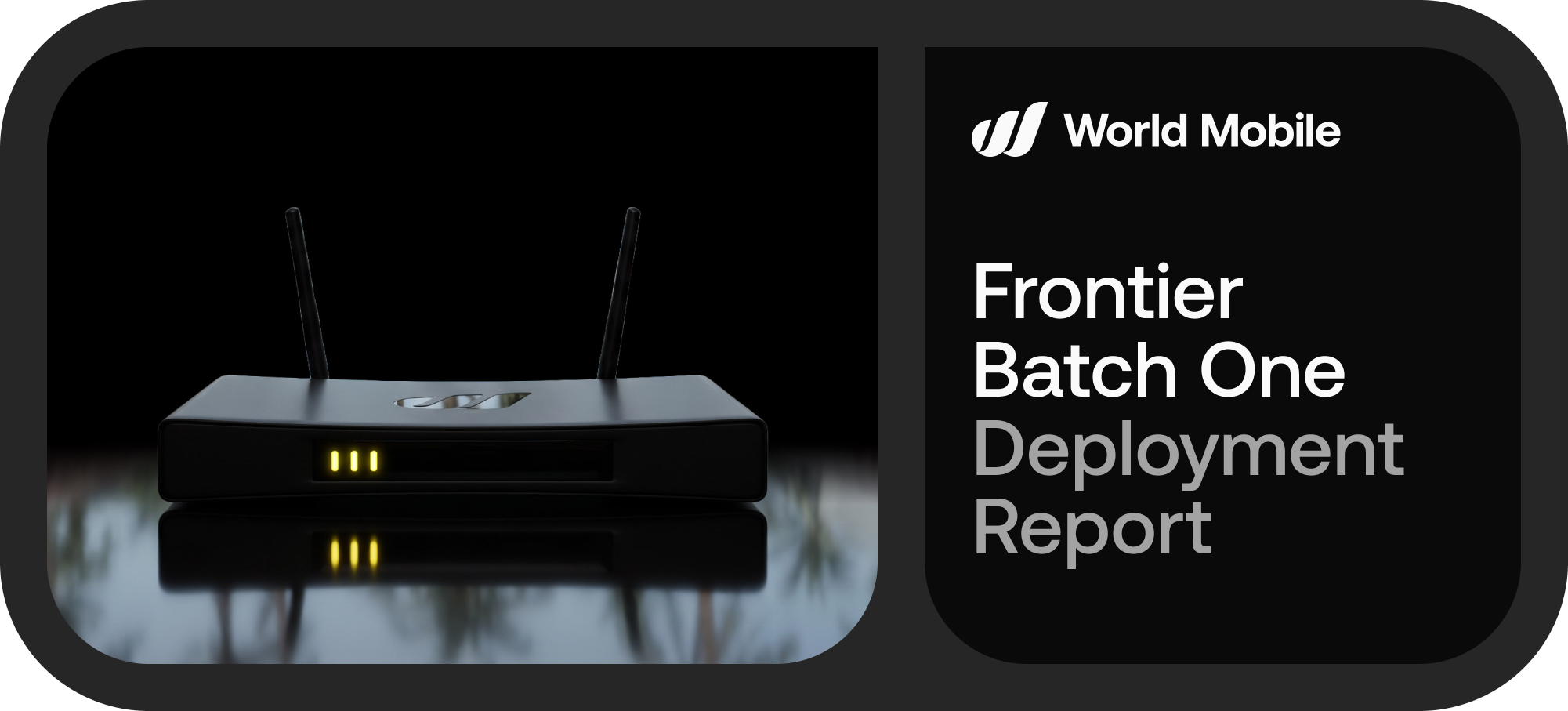
Today marks the final Frontier release of Batch One.
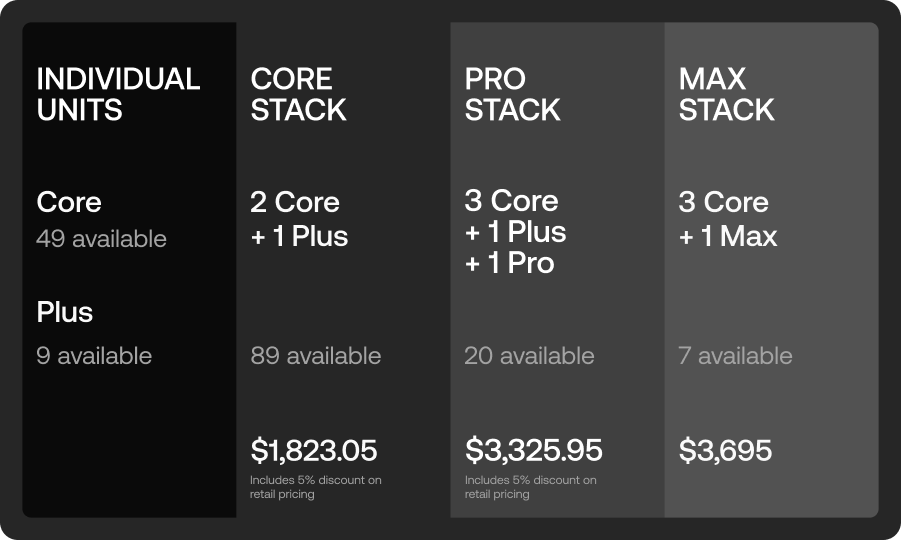
Following two sold-out drops, the final release introduces the new Frontier stacks alongside standalone
Core availability.
Once this drop closes, Batch One is complete.
For anyone evaluating the different Frontier options, Andrew's message from the Space was clear: look
beyond the tier name and consider the role each Frontier can play inside the network.
Max has a role.
Pro has a role.
Plus has a role.
And Core has a much bigger role than its entry position might suggest.
Frontier Batch One Final Drop goes live today, August 18, at 16:00 UTC.
AirNode Referrals Are Now Open to Everyone
There is also a new way to participate in today's drop.
The AirNode Affiliate Program, originally launched for Hex Operators, is now open to everyone.
Approved affiliates can share a referral code with a new AirNode buyer. The buyer receives 10% off their first qualifying Standard-tier order, while the affiliate earns 3% of that first qualifying order, capped at $30.
Bulk and volume-priced orders are excluded.
You can read the full AirNode Affiliate Program announcement here.
Listen to the Full Frontier Space
There was much more in the conversation, from the story behind the Philippines expansion to local operations, cellular ambitions, the role of the electrical cooperatives and where World Mobile hopes to take the model next.
Listen to the full conversation with Andrew Soper on X.
Siargao is where this chapter begins.
The infrastructure is going in. The local machine is taking shape. The next step is proving how far it can go.
Reclaim power. Build with us.