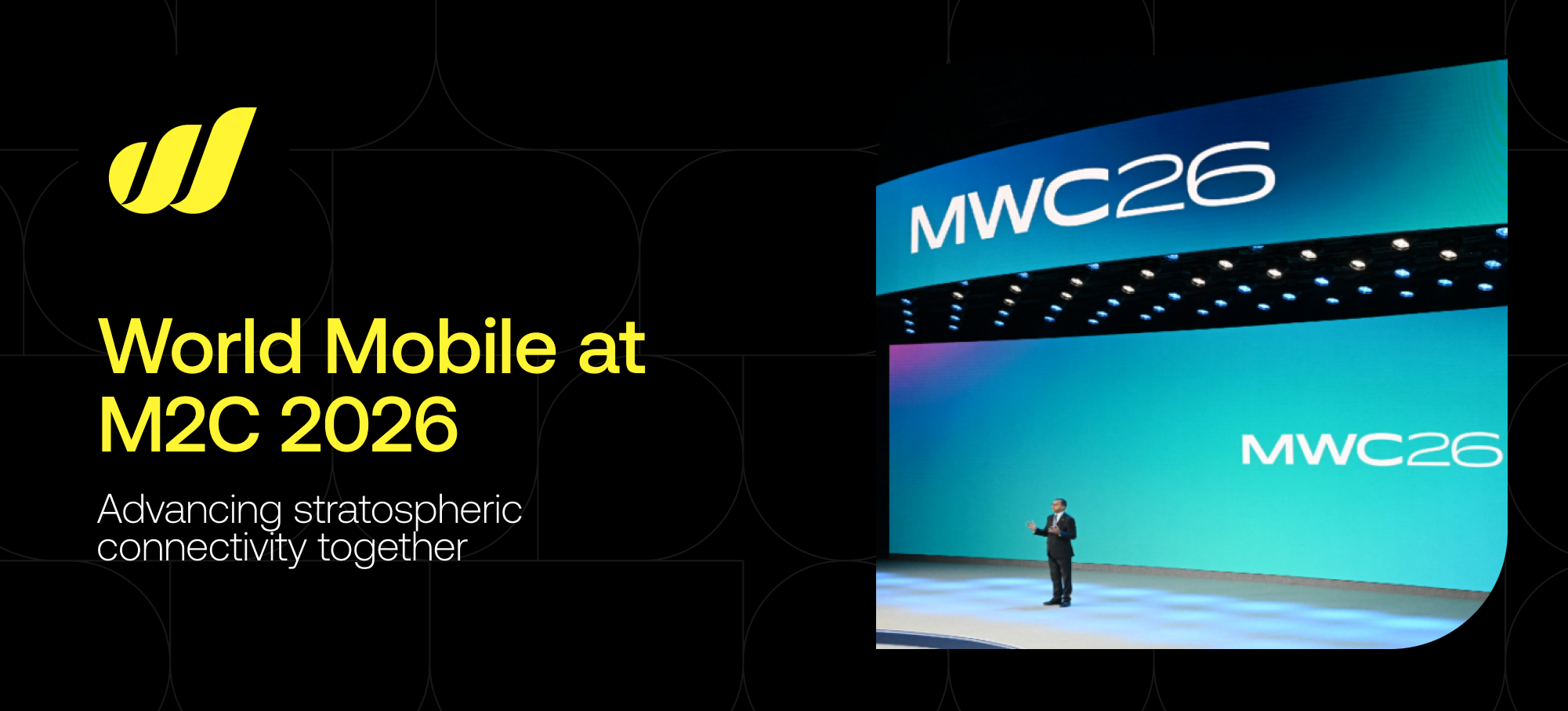
Mobile World Congress (MWC) returns to Barcelona every year as the central hub of telecom. Executives, engineers, policymakers, and innovators converge to discuss the next phase of global connectivity. In 2026, that conversation ran from March 2-5 at the Fira Gran Via venue.
This year, we arrived with a clear purpose. Our focus was World Mobile Stratospheric, the aerial connectivity program we are developing through a joint venture between World Mobile Group and one of the leading independent digital infrastructure companies in Indonesia, Protelindo.
The goal was simple: speak directly with the people shaping telecom’s future. Share how aerial infrastructure can complement ground infrastructure to extend coverage far more widely. And bring new partners into the conversation as we prepare for major milestones later this year.
Representing World Mobile in Barcelona
Our Stratospheric team was represented by Richard Deakin, CEO of World Mobile Stratospheric, Gregory Gottlieb, Head of Aerial Platforms at World Mobile, and Gareth Hamer, Country Operations Consultant.
World Mobile Group CEO Micky Watkins joined the team for part of the week, providing leadership insight and meeting several of the partners and industry figures attending the congress.
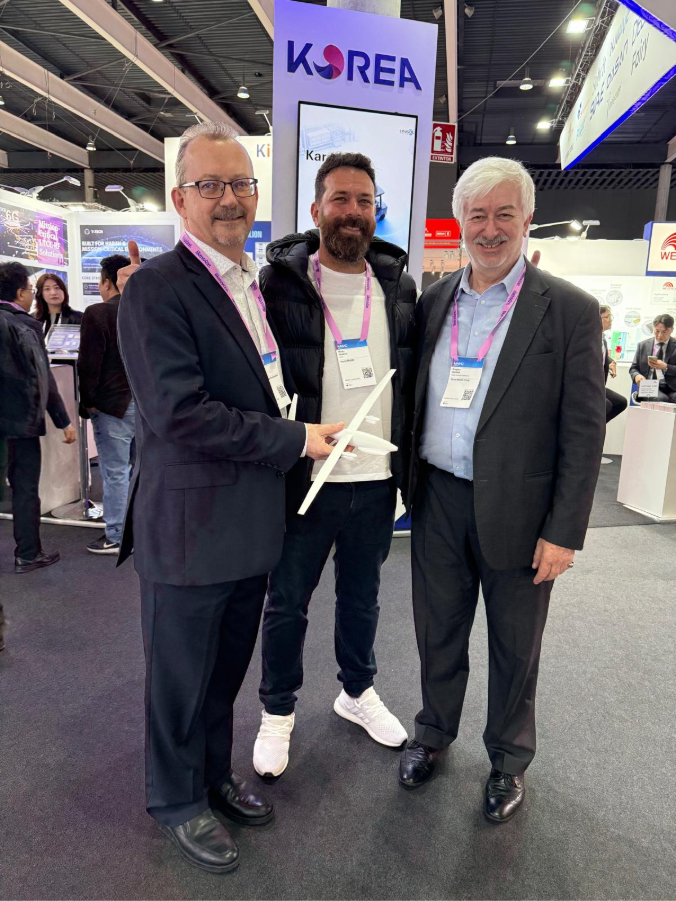
The first day of the conference was a day of preparation: attendees arriving, going over their schedules, and the program slowly taking shape. These early, slightly unstructured hours create opportunities for deeper conversations and easier access to meetings that become far harder to schedule once the full pace of the event takes hold.
Those discussions set the tone for the rest of the week.
Presenting the Stratospheric vision
The Stratospheric platform generated genuine excitement at MWC.
World Mobile Stratospheric introduces a new layer to connectivity infrastructure. Instead of relying entirely on ground towers, we introduce the StratoMast, a system consisting of unmanned aircraft equipped with advanced antennae and backhaul, operating in the stratosphere and extending specific, demand-based network coverage across wide areas.
A key component of StratoMast is a revolutionary AI-driven phased-array antenna designed to beam connectivity from the sky to users on the ground.
Gregory Gottlieb spent much of the week explaining how far the project has already progressed.
"Each time I presented the basic concept of what WMS is doing, people were blown away. Some of them said, ‘so this is just a concept on PowerPoint.’ And I said, no, we're way further down the road than that." - Gregory Gottlieb, Head of Aerial Platforms, World Mobile
That exchange says a lot about where the project now stands. Over the past year, development has moved from concept formation into practical preparation for real-world deployment.
In 2025, World Mobile acquired a Britten-Norman Islander aircraft for aerial testing and established a trial program with BT, one of the United Kingdom’s largest telecommunications providers. The trial will take place this summer and will demonstrate how airborne infrastructure can integrate with existing telecom networks.
MWC gave us the opportunity to explain that progress directly to industry leaders.
Building long-term relationships across the telecom ecosystem
Some of the most valuable conversations at MWC happen outside the exhibition hall.
Over the four days, the World Mobile team attended industry dinners, receptions, and networking events across Barcelona with a clear purpose: strengthening relationships across the telecom and technology ecosystem. One highlight was the well-known Swedish Beers event, a long-running gathering that brings together entrepreneurs and telecom innovators during MWC.
These interactions introduced us to engineers, investors, infrastructure partners, and well-known industry personalities. Among them were Ed Candy and Dr. Mike Short, both of whom responded enthusiastically to what World Mobile Stratospheric will offer. That kind of reaction mattered. It showed that the project resonated not only as an ambitious idea, but as a serious platform with real relevance to the future of connectivity.
That changed quickly once discussions moved beyond the headline idea and into the real engineering work already underway.
MWC also provided an opportunity to reconnect with people across the extended World Mobile ecosystem, including long-time collaborators and industry partners who continue to support the mission.
The team also met again with representatives from the GSMA, building on the relationship that has developed over years, including World Mobile’s GSMA Foundry Excellence Award for Innovation. These conversations focused on the continued evolution of decentralized connectivity and the role alternative infrastructure models can play in expanding global network access.
Working with the HAPS Alliance
Another important element of the week involved meetings connected to the HAPS Alliance, an industry group focused on High Altitude Platform Systems.
World Mobile Stratospheric recently became a full member of the alliance. MWC provided the first opportunity to meet several of those members face to face.
These discussions included companies developing their own aerial connectivity platforms and advisors with decades of regulatory and technical experience in the field.
The exchange of knowledge proved valuable. Aerial telecom remains an emerging sector, and progress depends on close collaboration between organizations solving similar technical challenges.
The next chapter of aerial connectivity begins
World Mobile exists to address one of the most persistent challenges in telecommunications: the uneven reach of connectivity.
Ground infrastructure alone cannot reach every region efficiently. Remote landscapes, islands, and disaster zones often fall outside conventional coverage models. Aerial systems solve this problem by freeing connectivity from the ground. Aircraft operating above terrestrial networks can deliver wide-area coverage and create specific coverage patterns, while integrating with existing telecom infrastructure. That capability strengthens the broader architecture we are building to connect people in more places around the world.
The conversations in Barcelona now feed directly into the next stage of development. Later this year, we will conduct the BT aerial connectivity trial, demonstrating how Stratospheric infrastructure performs in real conditions alongside an established telecommunications network. Engineers, industry partners, and policymakers will be invited to observe the system as it moves closer to deployment.
Reflecting on the event, World Mobile Group CEO Micky Watkins captured the significance of the week.
"Mobile World Congress brings together the people shaping the future of connectivity. It was an important opportunity to show how World Mobile Stratospheric fits into that future and to build the relationships that will help accelerate its deployment." - Micky Watkins, CEO, World Mobile
The path toward global connectivity is not built in isolation. It advances through collaboration, experimentation, and persistence. Every meeting, every conversation, and every new partner brought onboard strengthens that effort.
We left MWC with more people involved in the journey and greater momentum behind the mission that drives us all: connecting everyone, everywhere.