
The first EmberNodes open for public sale on Wednesday, 15 April at 16:00 UTC.
This is your chance to own network distribution infrastructure in Pakistan for the first time.
Before a drop like this, clarity matters. The stronger your understanding, the stronger your conviction when it is time to act.
So, we have put this blog together to answer the most important questions around EmberNodes as clearly as possible. Read through it, get familiar with how The EmberNode works, and step into the drop with confidence.
The basics
1. What is an EmberNode?
An EmberNode is a cabinet-based network infrastructure node.
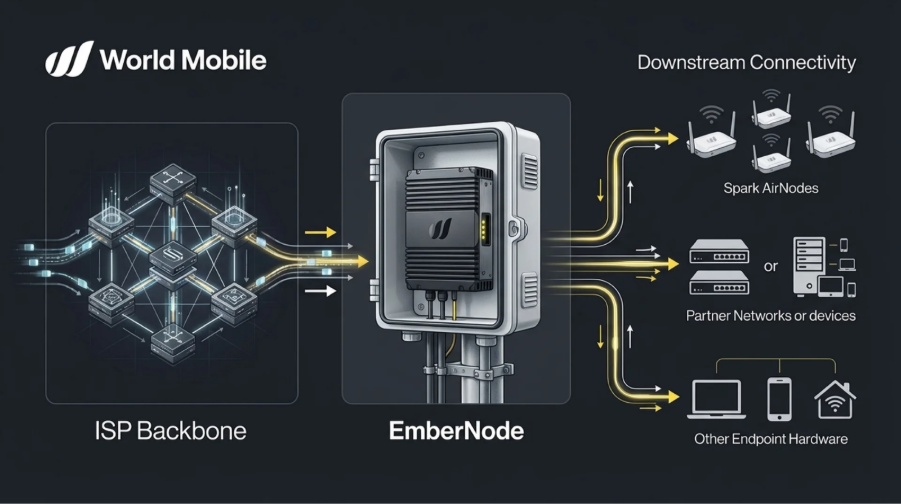
It is a ruggedized outdoor fiber gateway installed in a street cabinet or enclosure that takes connectivity from an ISP backbone and distributes it downstream across the local network.
It sits one step higher than endpoint connectivity, including the kind delivered by Spark AirNodes.
If you live in the US or UK, you may have seen one of these street cabinets containing network infrastructure owned by companies such as AT&T and Openreach.
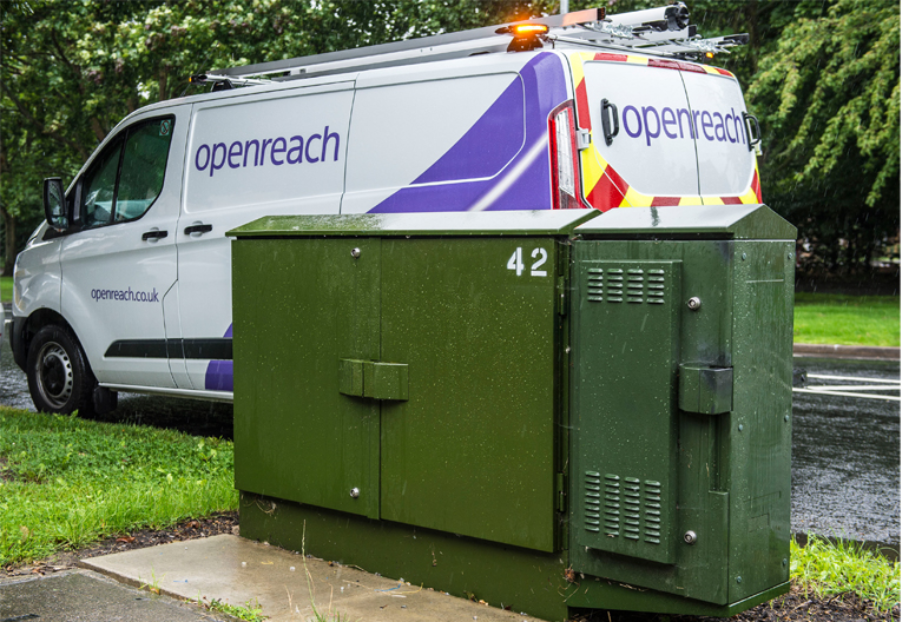
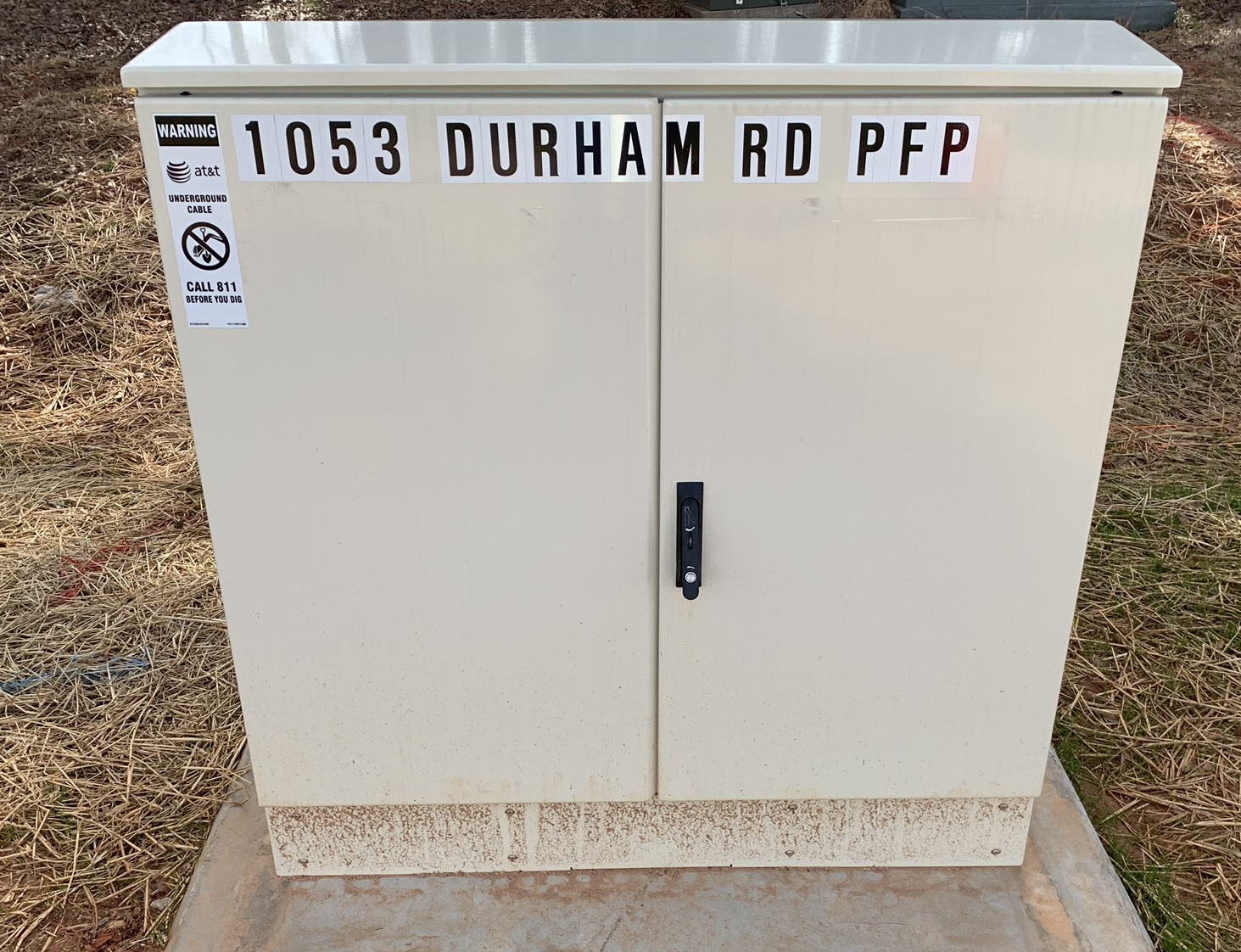
The EmberNode is placed inside a similar outdoor enclosure in Pakistan.
2. Where does the EmberNode sit in the network?
The EmberNode sits between the ISP backbone and downstream network infrastructure.
It receives high-capacity wholesale connectivity from the backbone and distributes it to devices and services further down the network, including Spark AirNodes and other infrastructure.
3. Does the EmberNode provide internet directly to end users?
No.
EmberNode does not serve end users directly. It operates upstream in the network and supports the infrastructure that delivers connectivity to people on the ground.
4. How are EmberNodes physically deployed in the network?
Each EmberNode is a modular unit, not a standalone cabinet. A single fiber enclosure can house multiple modules, and the Pakistan network already has extensive infrastructure coverage through local partnerships.
We want to add this information to an FAQ. What appropriate question can I come up with?
5. Is the EmberNode a replacement for the Spark AirNode?
No.
The EmberNode is an additional infrastructure layer, not a replacement. Spark AirNodes remain a core part of the network, and the two node types complement each other.
Together, they open a broader opportunity for network ownership within Pakistan.
6. What kinds of infrastructure does an EmberNode support downstream?
An EmberNode supports a range of downstream devices and network connections, including but not limited to Spark AirNodes, other endpoint equipment, carrier partners, etc.
Ownership and operation
7. Who can buy an EmberNode?
Anyone.
Sales are open globally, and no prior node ownership is required.
8. Where are EmberNodes deployed?
EmberNodes are deployed across Pakistan as modular units within fiber network enclosures, street cabinets, fiber splice points, dark fiber activation sites, and copper replacement installations as part of World Mobile’s live infrastructure rollout with local partners.
9. Do I need to install or manage the hardware myself?
No.
EmberNodes are installed and maintained by engineers. Operators do not need to handle physical deployment.
10. What is the Operator’s role?
The Operator’s role is remote and ownership-based.
You own the EmberNode, monitor performance through the dashboard, and track usage and rewards over time.
11. How much does an EmberNode cost?
The purchase price is $165 per EmberNode as a one-time payment.
To make EmberNodes more accessible, a tiered pricing structure has been introduced. This model rewards larger commitments by reducing the cost per node as your purchase volume increases.
Tiered pricing structure:
- 1–10 units: $165 per node
- 11–149 units: $150 per node
- 150–300 units: $145 per node
This structure is applied progressively, ensuring that each tier benefits from its corresponding price point.
Illustrative example:
If you purchase 15 EmberNodes, the pricing is calculated as follows:
- The first 10 units are priced at $165 per node
- The remaining 5 units are priced at $150 per node
This approach lowers the average cost per node while maintaining fair and transparent pricing across all purchase levels.
Rewards and earnings
12. How do EmberNode rewards work?
EmberNode rewards are based on verified network traffic.
This is not a fixed-rewards model like Spark AirNode. Rewards are tied to the amount of traffic your EmberNode carries on the live network. As usage grows, the earning opportunity grows with it.
The current reward rate is approximately $0.004167 per GB of data carried, often rounded to $0.0042.
Our current planning benchmark is 800 GB of data carried per EmberNode per month. At that rate, one EmberNode may earn about $3.33 per month.
Thus, an Operator with 10 EmberNodes may earn about $33.33 per month, or about $399.96 per year.
That benchmark is a planning average, not a ceiling. Some EmberNodes may carry more traffic in a month, and others may carry less. Actual rewards depend on the specific conditions around each EmberNode and the amount of verified traffic it supports on the live network.
These figures are illustrative only. They do not represent a commitment or guarantee. Rewards are not fixed and will vary based on the verified traffic carried by each EmberNode.
Why Pakistan, and why now?
13. Why is the focus on Pakistan?
Pakistan is an active deployment market where the network already has scale, demand, and momentum.
It already has a large Spark AirNode rollout, proven demand, and established infrastructure partnerships. It is also a market where the telecom sector is growing rapidly, which makes it a strong place to expand ownership into a new layer of the network.
The First EmberNode Drop
14. When will EmberNodes be available?
The first public drop is scheduled for Wednesday, 15 April at 16:00 UTC.
EmberNode drops will happen regularly after that. Anyone subscribed to the mailing list will be notified about an upcoming drop one week in advance.
15. How many EmberNodes will be available in the first drop?
Approximately 3,000 EmberNodes will open for public purchase in the upcoming drop on 15 April. Exact numbers may vary.
Join the community update, prepare for the drop
We are also hosting a live Community Update on X Spaces tomorrow, Tuesday, 14 April at 16:00 UTC.
This session exists to answer even more questions on the EmberNode in a live environment. It is your chance to get more context on the product, raise anything that is still unclear, and head into the public drop with maximum clarity and confidence.
If you want the fullest possible picture before Wednesday, join the AMA on X Spaces.
The first EmberNode public drop begins on 15 April at 16:00 UTC. Be ready.